

Here's the truth most Shopify store owners don't realize: you're sitting on untapped revenue because you haven't explored Shopify Collective yet. This platform connects you with verified suppliers who'll dropship quality products to your customers—no inventory investment, no storage headaches, just pure profit potential.
I'm walking you through the exact process to request access to brands like Kalahari Gold (yes, that's my marula oil business) or any other supplier in the Collective network. This isn't complicated, but most entrepreneurs waste time fumbling through it. Let's fix that.
Why Shopify Collective Matters for Your Store
Let me be direct: if you're not leveraging Shopify Collective, you're leaving money on the table. This isn't just another app—it's your gateway to expanding your product catalog without the cash flow nightmare of buying inventory upfront.
The beauty of Collective? You're connecting directly with brands through Shopify's infrastructure. No shady suppliers, no AliExpress roulette, no worrying about whether your products will actually show up. These are legitimate businesses using the same platform you are.
For brands like mine (Kalahari Gold), it's how we scale distribution without building a massive sales team. For retailers like you, it's how you test new product categories without risking your capital.
Before You Start: What You Need
- An active Shopify store (any plan works)
- Admin access to your store dashboard
- A clear idea of which brands align with your store's niche
- 5 minutes of focused time—seriously, that's all this takes
How to Vet Suppliers Before Requesting Access
Here's where most retailers screw up: they request access to any brand that looks halfway decent, then wonder why their conversion rates tank or customers complain about shipping times. Don't be that person.
Before you click that "Request Access" button, do your homework. I'm talking about 30 minutes of research that could save you months of headaches and customer service nightmares. Here's your vetting checklist:
1. Analyze Their Store Traffic and Performance
You want to partner with suppliers who are actually moving product. Use tools like Ubersuggest or Koala Inspector to check their website traffic and estimated sales volume.
What you're looking for:
- Consistent traffic (not just a one-time viral spike)
- Multiple traffic sources—organic, social, direct
- Reasonable estimated monthly revenue
- Growing trend, not declining
If a supplier has zero traffic to their own store, that's a red flag. Either their products don't sell, or they're brand new and untested. Neither scenario is ideal for your first Collective partnership.
2. Deep Dive Their Shipping and Return Policies
This is non-negotiable. Go to their website and read every word of their shipping and return policies. I mean it—every single word.
Critical questions to answer:
- What are their shipping timeframes? (2-day shipping or 2-week shipping?)
- Do they ship internationally if your customers are global?
- What's their return window? (30 days? 60 days? No returns?)
- Who pays return shipping—them or your customer?
- Are there restocking fees?
- How do they handle damaged or defective products?
If their policies are vague, buried, or non-existent—run. Your customers will hold YOU accountable when things go wrong, not the supplier.
3. Actually Buy Their Product (Yes, Spend the Money)
This is the step nobody wants to do because it costs money. Do it anyway. Order one of their products as a regular customer and track the entire experience.
What you're testing:
- Order confirmation: Did you get an immediate email with tracking?
- Shipping speed: Did it arrive when they said it would?
- Packaging quality: Did it arrive damaged? Was the packaging professional or thrown together?
- Product quality: Does it match the photos and description?
- Brand presentation: Does the packaging align with YOUR brand, or would it confuse your customers?
- Unboxing experience: Would you be proud to have your customer receive this?
If the product shows up in a beat-up box with no branding and takes three weeks to arrive, your customers will blame your store—not the supplier. This $20-50 test order could save you thousands in refunds and lost customer trust.
4. Investigate Their Business Credibility
Do the basic background check you'd do before hiring anyone important for your business—because that's essentially what you're doing.
Google their brand name + these terms:
- "[Brand Name] reviews"
- "[Brand Name] complaints"
- "[Brand Name] scam" (yes, really)
- "[Brand Name] reddit" (Reddit doesn't lie)
Look for patterns. One negative review? Not a deal-breaker. Dozens of complaints about non-delivery or quality issues? That's your exit cue.
5. Check How Long They've Been in Business
Look at their website footer, About page, or do a WHOIS domain lookup. A brand that's been around for 3+ years has proven staying power. A brand launched two months ago? They're still figuring things out—and you don't want to be their guinea pig.
Where to check:
- Their About Us page (most list founding year)
- WHOIS domain registration date
- Wayback Machine (archive.org) to see site history
- Business registration databases if you're really thorough
6. Audit Their Social Media Presence
A legitimate brand has social proof. Check their Instagram, Facebook, TikTok, and LinkedIn. You're looking for consistency, engagement, and authenticity.
Red flags on social media:
- No social presence at all
- Bought followers (10K followers but 12 likes per post)
- No customer photos or user-generated content
- Complaints in comments that go unanswered
- Last post was 8 months ago
Green flags:
- Active community engagement
- Real customer photos and testimonials
- Responsive to questions and concerns
- Behind-the-scenes content showing real operations
- Influencer partnerships or press mentions
7. Verify Product Market Fit with YOUR Brand
Just because a product is good doesn't mean it's good for your store. Ask yourself:
- Does this product make sense alongside what I already sell?
- Will my existing customers want this?
- Does the price point match my store's positioning?
- Does their brand aesthetic align with mine?
- Can I authentically market this to my audience?
If you're selling minimalist Scandinavian home decor, don't add neon leopard-print phone cases just because the margins are good. Brand coherence matters more than you think.
8. Look for Professional Business Practices
The little details tell you everything about how they operate.
Good signs:
- Professional website with clear policies
- Business email addresses (not @gmail.com)
- Phone number and business address listed
- Terms and conditions clearly stated
- Professional product photography
- SSL certificate (https:// not http://)
- Privacy policy and legal compliance
9. Test Their Customer Service Before You Partner
Send them an email or message with a pre-sales question. Time how long it takes them to respond and evaluate the quality of their answer.
If they take five days to answer a simple question, imagine how they'll handle your retail customer's return request. Customer service quality is one of the most overlooked factors in supplier selection—don't make that mistake.
10. Check Their Wholesale Margins
Once you have access to their wholesale pricing, run the numbers. Can you realistically make money after:
- Their wholesale cost
- Your payment processing fees
- Your marketing costs to acquire customers
- Your time managing the relationship
If you need to mark up 300% just to break even, the math doesn't work. Look for products where you can comfortably achieve 2-3x markup while staying competitive.
The Bottom Line on Vetting
I know this seems like a lot of work. It is. But here's the truth: doing this vetting process once will save you from costly mistakes that tank your conversion rates, destroy your customer trust, and waste months of your time.
Most entrepreneurs skip this step because they're excited or desperate for new products. Don't be most entrepreneurs. Be strategic. Be thorough. Your future self will thank you when you're not fielding angry customer emails about late shipments or poor quality products.
Once you've done this homework and a supplier passes your checklist, then—and only then—move forward with requesting access.
Step-by-Step Access Request Process
Step 1: Navigate to Your Shopify Apps Section
From your Shopify admin dashboard, click on Apps in your left sidebar. This is your command center for all integrations.

Step 2: Search for Shopify Collective
In the search bar at the top of your dashboard, type "collective". You'll be redirected to the Shopify App Store.

Step 3: Install the Collective App
Click the Install button. Shopify will redirect you back to your store dashboard.
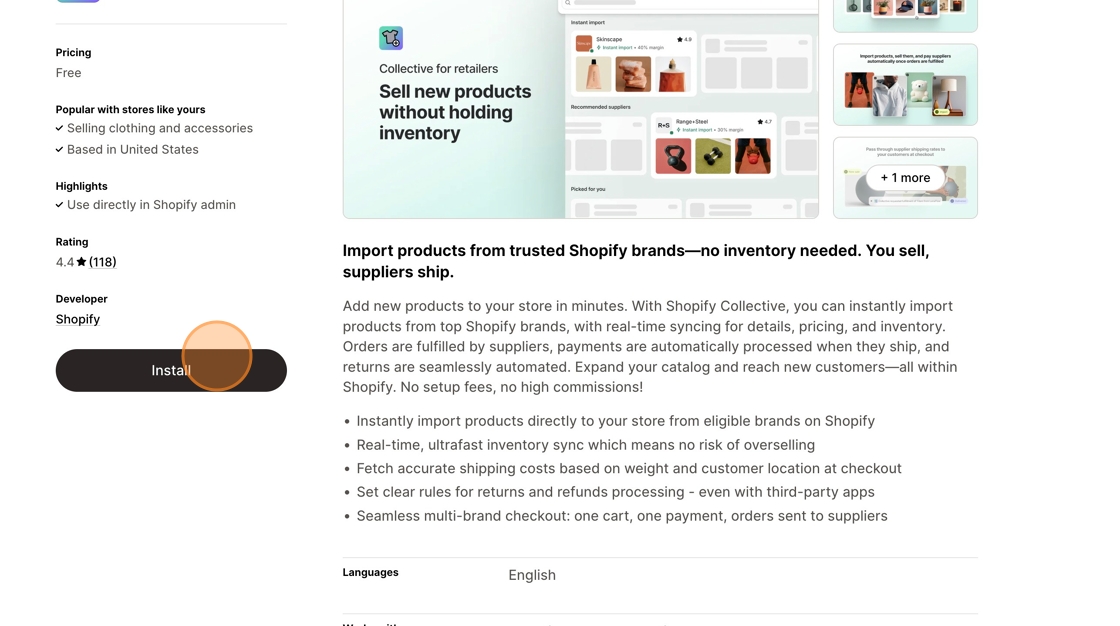
Step 4: Confirm Installation
Click Install again to confirm. This authorizes the app to access your store data.

Step 5: Pin the App to Your Sidebar
Here's a pro move most people skip: pin the Collective app to your sidebar so it's always visible. You'll thank me later when you're managing multiple supplier relationships.

Step 6: Launch the Setup Process
Click Get started to open the Collective interface.

Step 7: Access the Product Search
Click on the Search for products and suppliers field. This is where the magic happens.

Step 8: Find Your Target Brand
Type the brand name you're looking for—in this example, type "kalahari" to find Kalahari Gold. Click on the brand name when it appears in the results.

Step 9: Request Access
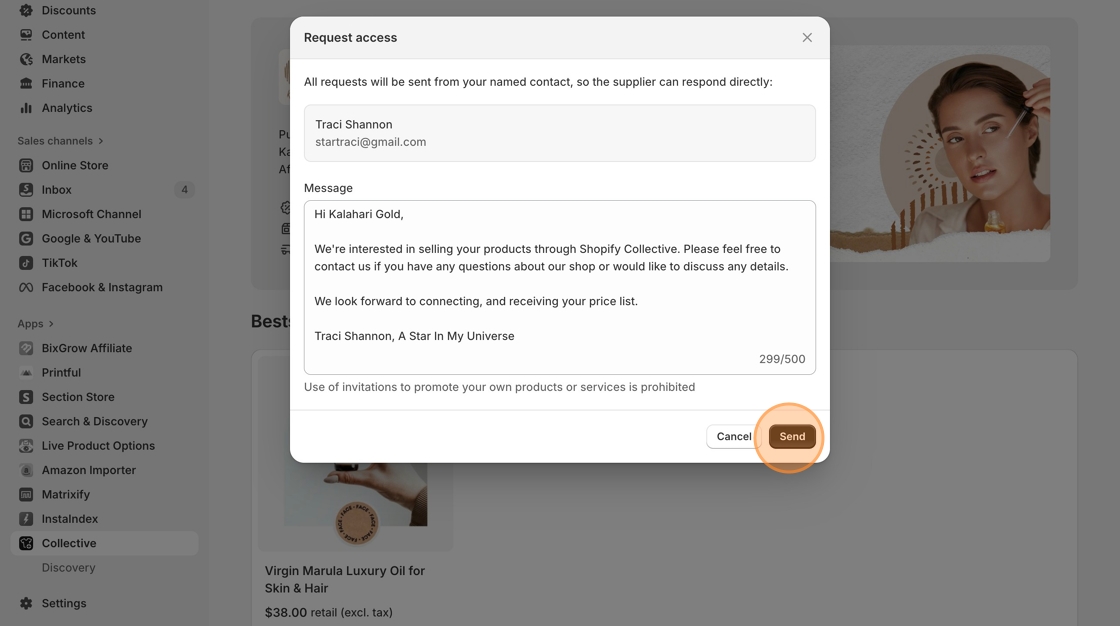
Click Request access. This triggers an automated email to the supplier.

Step 10: Customize Your Message (Optional)
Shopify auto-generates a professional access request email. You can customize it if you want to add context about your store, but the default message works perfectly fine. Click Send.
Now What?
You wait for the brand to approve your request. Most professional suppliers respond within 24-48 hours.
What Happens After You Request Access
The supplier receives your request and reviews your store. They're looking at:
- Whether your store aligns with their brand values
- Your store's professional appearance
- Whether you're already selling complementary products
- Your potential as a long-term retail partner
Once approved, you'll get access to their product catalog. You can then:
- Import products to your store with one click
- Set your own retail pricing (markup is your profit)
- When a customer orders, the supplier ships directly to them
- You get paid, the supplier gets their wholesale price, you keep the difference
Pro Tips for Getting Approved Faster
Make Your Store Look Professional
Brands want retail partners who'll represent them well. Before requesting access, make sure your store has professional product photos, clear policies, and a cohesive brand presence.
Target Aligned Brands
Don't request access to luxury skincare if you're selling power tools. Suppliers approve retailers whose existing catalog makes sense with their products.
Customize Your Request Message
While the auto-generated message works, adding a personal note about why you want to carry their products can increase approval rates. Show them you've done your homework.
Have Your Business Details Ready
Some suppliers might follow up with questions about your business volume, target market, or marketing plans. Be prepared to answer professionally.
Start with a Few Key Brands
Don't spam requests to 50 suppliers on day one. Start with 3-5 brands that genuinely fit your store, get approved, test the relationship, then expand.
