

Let's talk about something that trips up almost every Shopify store owner who's ready to scale: staff permissions.
You've hit the point where you can't do everything yourself anymore. Maybe you're hiring a VA, bringing on a developer, or adding a team member to handle orders. That's growth—and it's exactly where you should be.
But here's the thing most people get wrong: they either give everyone full access (terrifying) or they don't know how to set it up properly and waste hours figuring it out. Neither option works when you're building a business that should run like a machine.
This guide walks you through the complete staff permissions system in Shopify—adding users, assigning the right access levels, working with collaborators, and the critical ownership transfer process that every store owner needs to understand.
What's In This Guide
- Why Staff Permissions Matter More Than You Think
- How to Add Staff Members (Step-by-Step)
- Understanding Permissions: What to Give and What to Lock Down
- Administrator Roles Explained
- Collaborator Access for Developers and Partners
- Managing Your Users Dashboard
- Store Ownership Transfer: The Critical Step
- Smart Permission Strategy by Role
- Frequently Asked Questions
Why Staff Permissions Matter More Than You Think
Here's the reality most Shopify store owners don't think about until it's too late: every person who has access to your store is a potential risk and a potential asset. The difference is how you set up their permissions.
I've seen store owners give their brand-new VA full admin access on day one. I've also seen developers hold stores hostage because the owner never took ownership. Both situations are completely avoidable with 15 minutes of setup.
Staff permissions in Shopify are actually one of the most well-designed features on the platform. They let you control exactly what each person can see, edit, and manage. The key is knowing what each permission does and having a strategy for who gets what.
Users are staff members you add to your Shopify store by creating user accounts in your admin. This lets you grant your team access to Shopify while controlling what they can see and do. You create and assign roles to each user with the specific permissions they need to complete tasks like adding products or managing orders.
The number of users you can add depends on your pricing plan:
| Shopify Plan | Staff Accounts | Collaborator Accounts |
|---|---|---|
| Basic | None | Unlimited |
| Shopify | 5 | Unlimited |
| Advanced | 15 | Unlimited |
| Plus | Unlimited | Unlimited |
As the store owner, you can manage users along with anyone you've assigned the Administrator role. And here's a detail that saves you money: collaborator accounts for developers and partners don't count toward your staff limit.
How to Add Staff Members: Step-by-Step
Adding a new staff member takes about 5 minutes. Here's exactly how to do it—with screenshots so you can follow along.
Go to Settings in your Shopify dashboard, then select "Users" or "Users and permissions" from the menu.
This is your command center for managing everyone who has access to your store. From here you can add, edit, and remove team members and see exactly who has access to what.
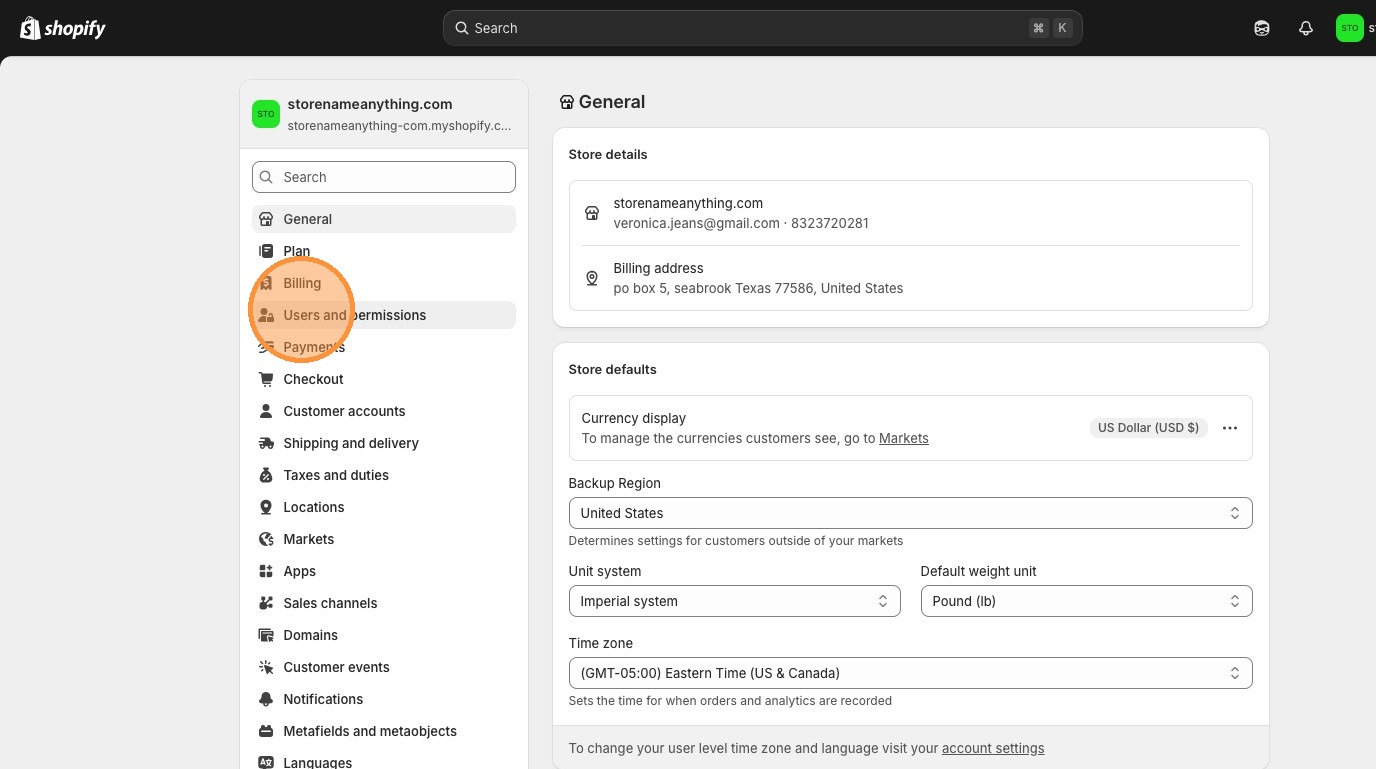
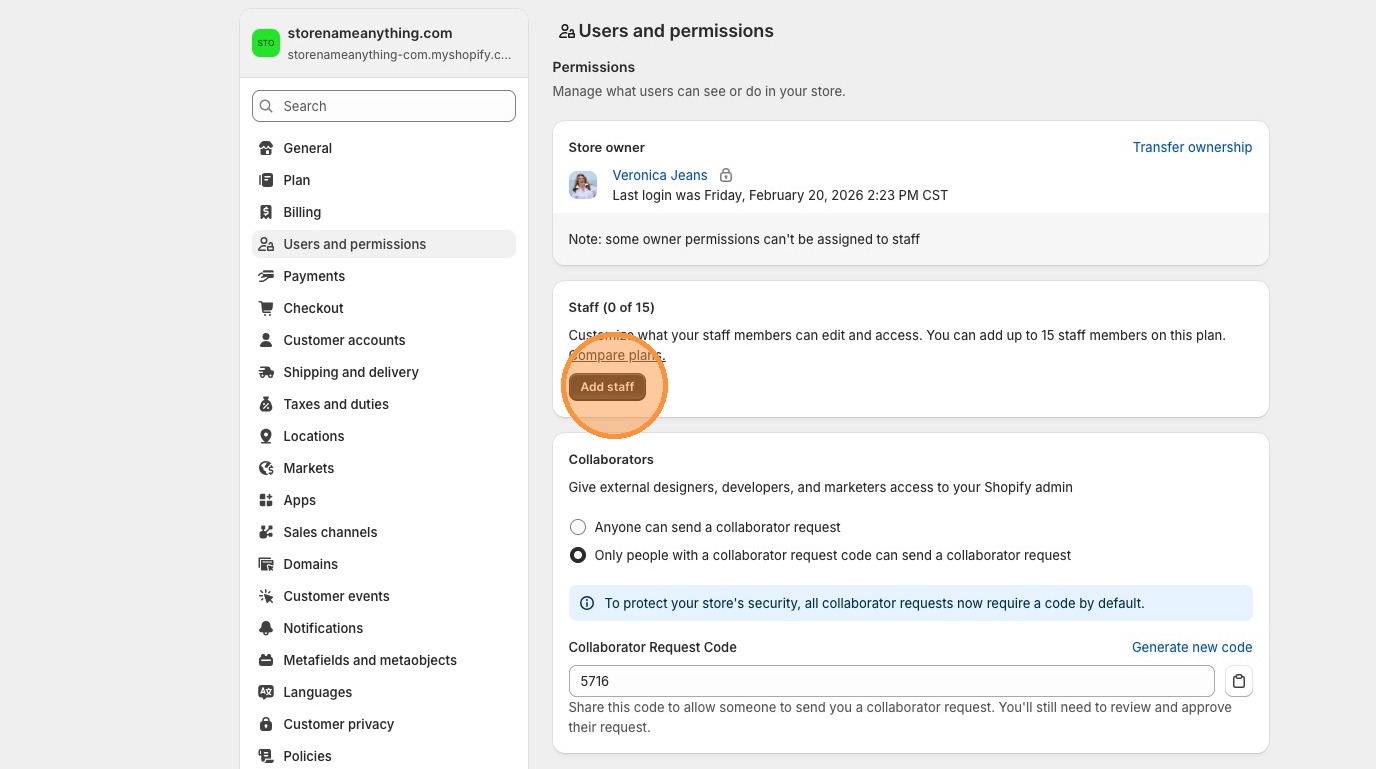
With a new store, you can add staff before choosing a plan. Once your store is active, the number of staff you can add depends on your Shopify plan.
Click the "Add staff" button to start the process.
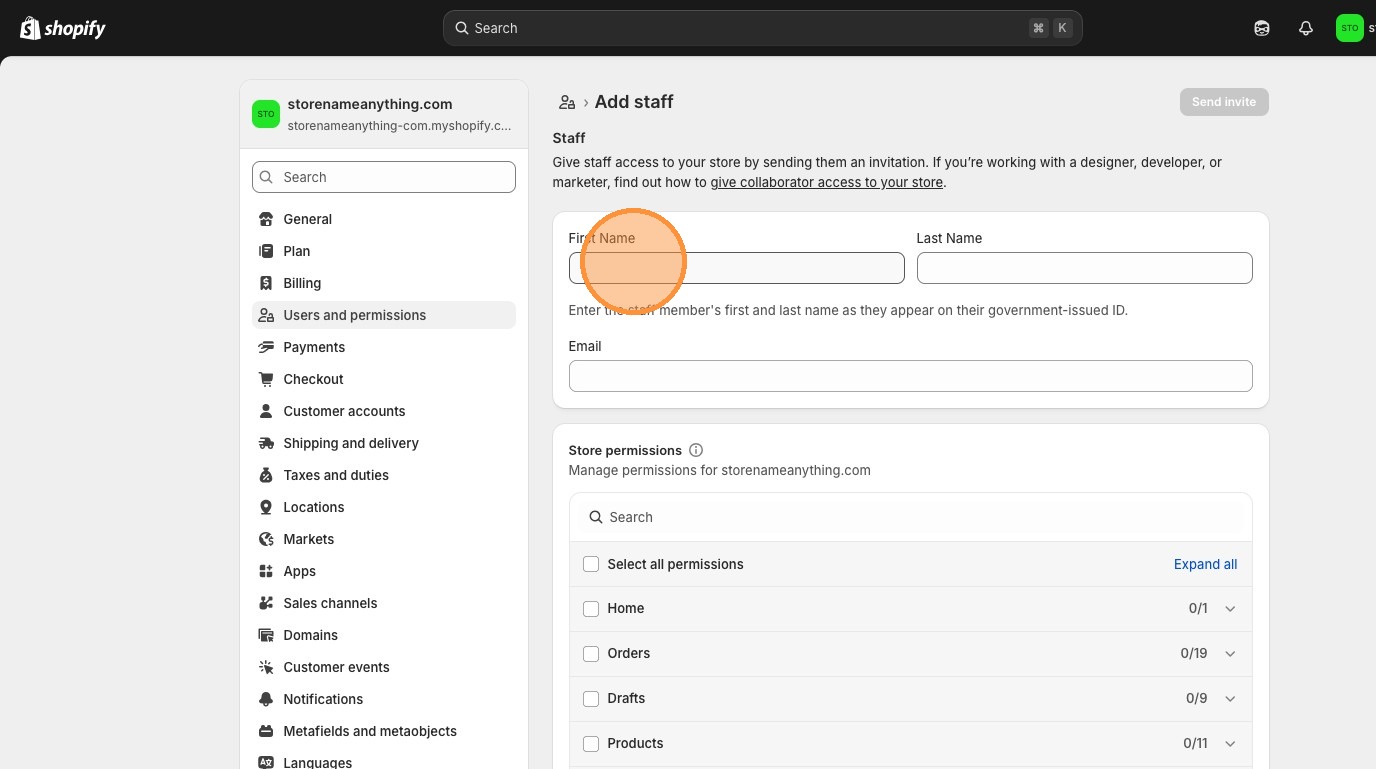
Fill in the new user's details: first name, last name, and email address. This email is what they'll use to log in, so make sure it's an email they actively use.
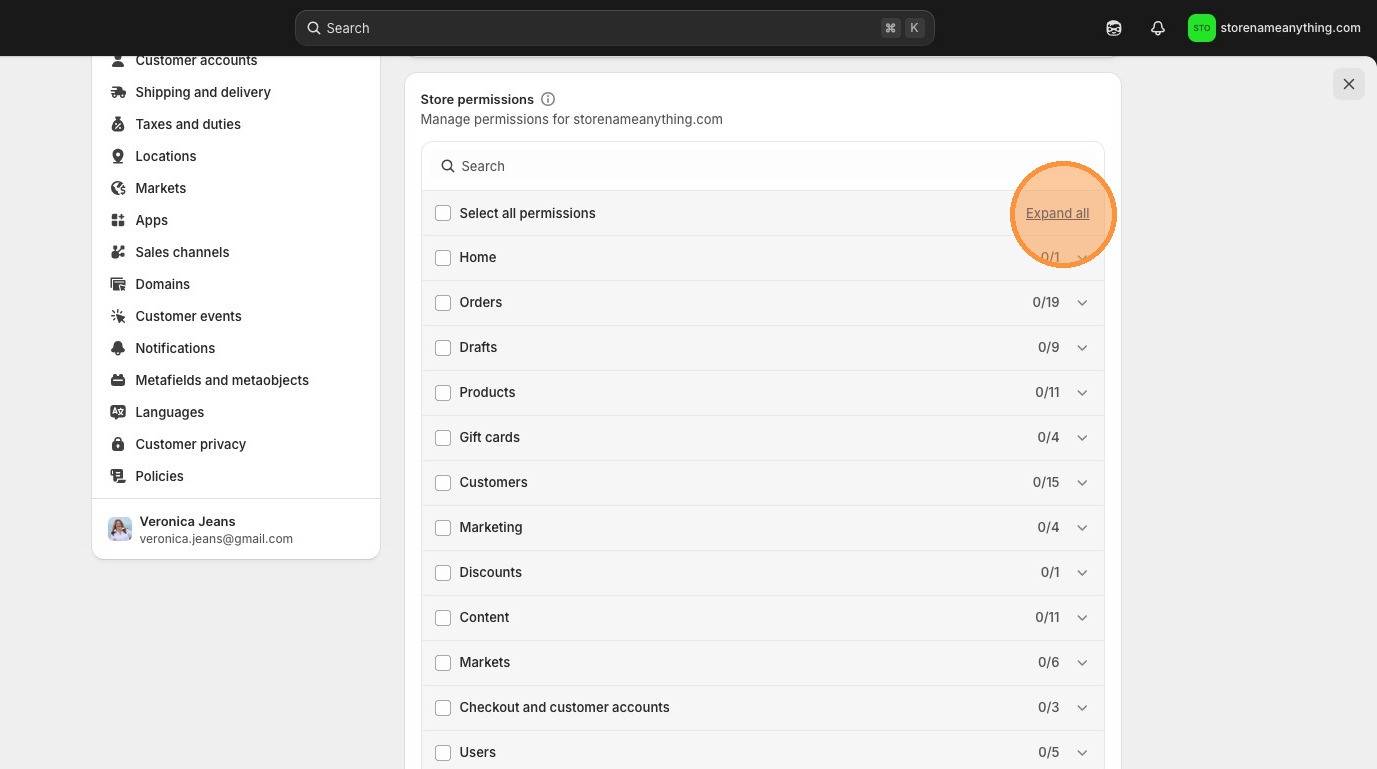
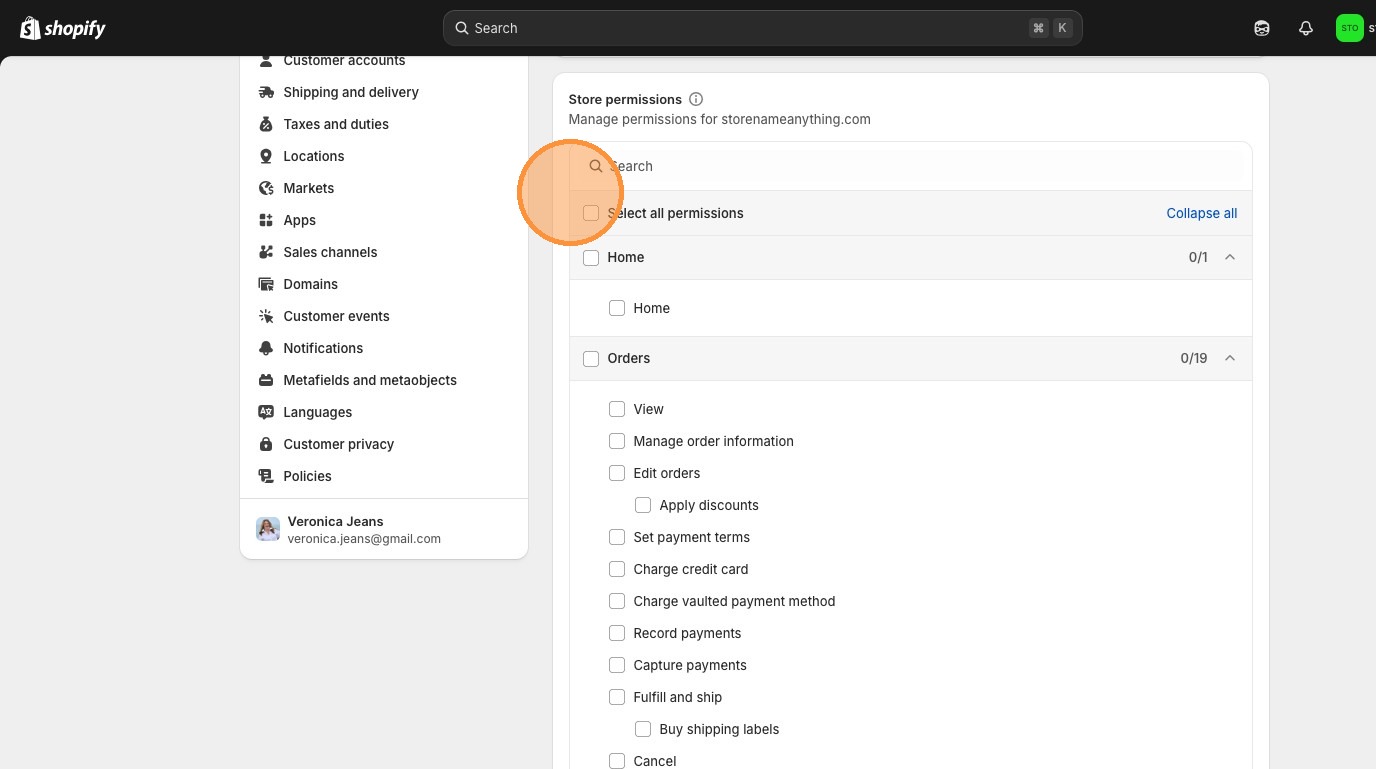
Click "Expand all" on the Permissions section to see every available permission. This is where you decide exactly what this person can see and do in your store.
You can select individual permissions or click "Select all permissions" for full access. My recommendation? Start with the minimum and add more as needed.
Click "Select all permissions" to grant full access, or check individual boxes to create a custom permission set. Each section controls a different area of your store—products, orders, customers, analytics, and more.
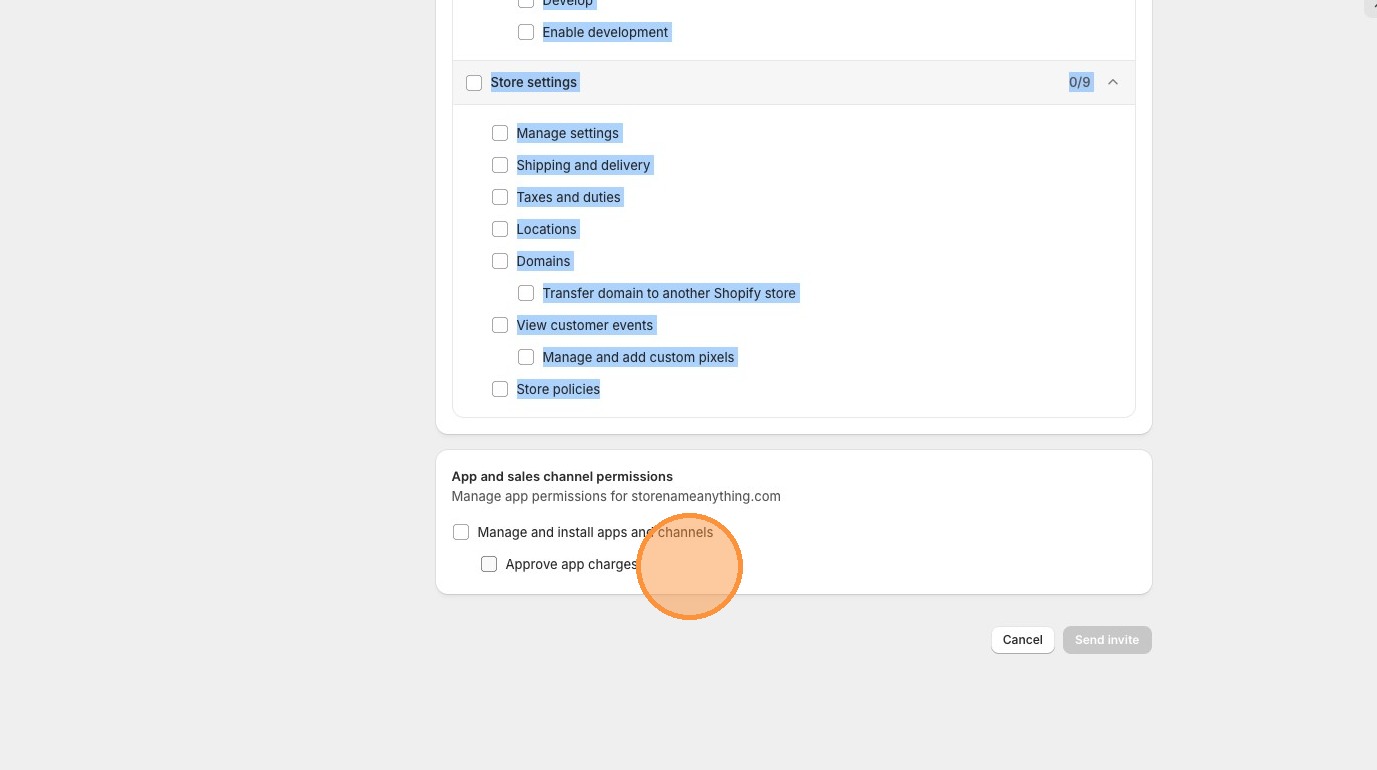
There are two separate permissions in the "App and sales channel permission" section that are often overlooked:
- "Manage and install apps and sales channels" — controls whether the user can add or remove apps
- "Approve app charges" — controls whether they can approve paid app subscriptions
Think carefully before giving someone app installation access. Apps can access customer data, modify your theme, and incur monthly charges.
Understanding Permissions: What to Give and What to Lock Down
Not all permissions are created equal. Here's the strategic breakdown of what each permission area controls and who should have access:
High-Risk Permissions (Owner and Trusted Managers Only)
- Settings access — Controls store configuration, payment providers, shipping, taxes
- App installation — Can add apps that access all your store data
- Approve app charges — Can commit to recurring paid subscriptions
- Financial reports — Shows revenue, profit margins, and payment details
- User management — Can add or remove other staff members
Medium-Risk Permissions (Managers and Experienced Team)
- Customer management — Access to customer data including emails and addresses
- Discount creation — Can create discount codes that affect revenue
- Marketing — Can send emails and create campaigns on your behalf
- Analytics — Can see store performance data
Standard Permissions (Day-to-Day Operations)
- Products — Add, edit, manage product listings
- Orders — View and fulfill orders
- Content — Manage blog posts and pages
- Inventory — Update stock levels
Administrator Roles Explained
Shopify has two built-in administrator system roles that grant elevated access. These are high-trust roles—only assign them to people you genuinely trust with your business.
Organization Administrator Role
The Organization administrator role grants permissions for almost all features and resources in your organization and all stores, including sensitive permissions and user management.
Store User Administrator Role
The Store user administrator role is more limited—it only grants user management permissions for specific stores. This person can manage users in their assigned stores but cannot:
- Create or edit user roles
- Delete users from the organization
- Assign organization-level roles
- Create, edit, or manage groups
- Suspend users
- View, create, or edit non-user resources (products, orders, etc.)
This role is perfect for a team lead who needs to manage their direct reports' access without having broader business permissions.
Collaborator Access for Developers and Partners
This is where Shopify gets smart—and where you save money on your plan.
Collaborators are Shopify Partners who you've allowed to access your store. They work differently from regular staff accounts in some important ways:
- They don't count toward your staff limit — huge advantage on lower plans
- They access your store from their Partner Dashboard or the Shopify mobile app
- They have access to Shopify training courses, product roadmaps, and partner resources
- You control and can remove their access at any time
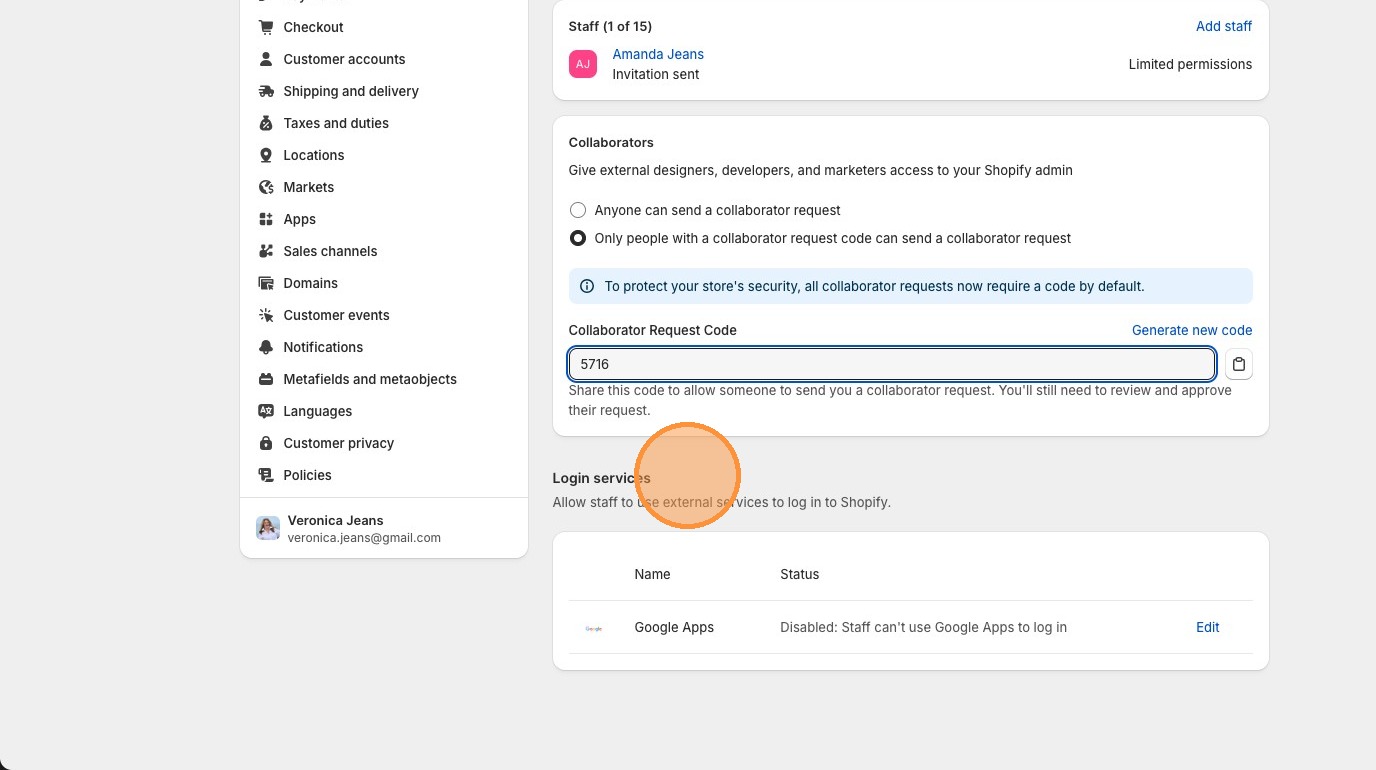
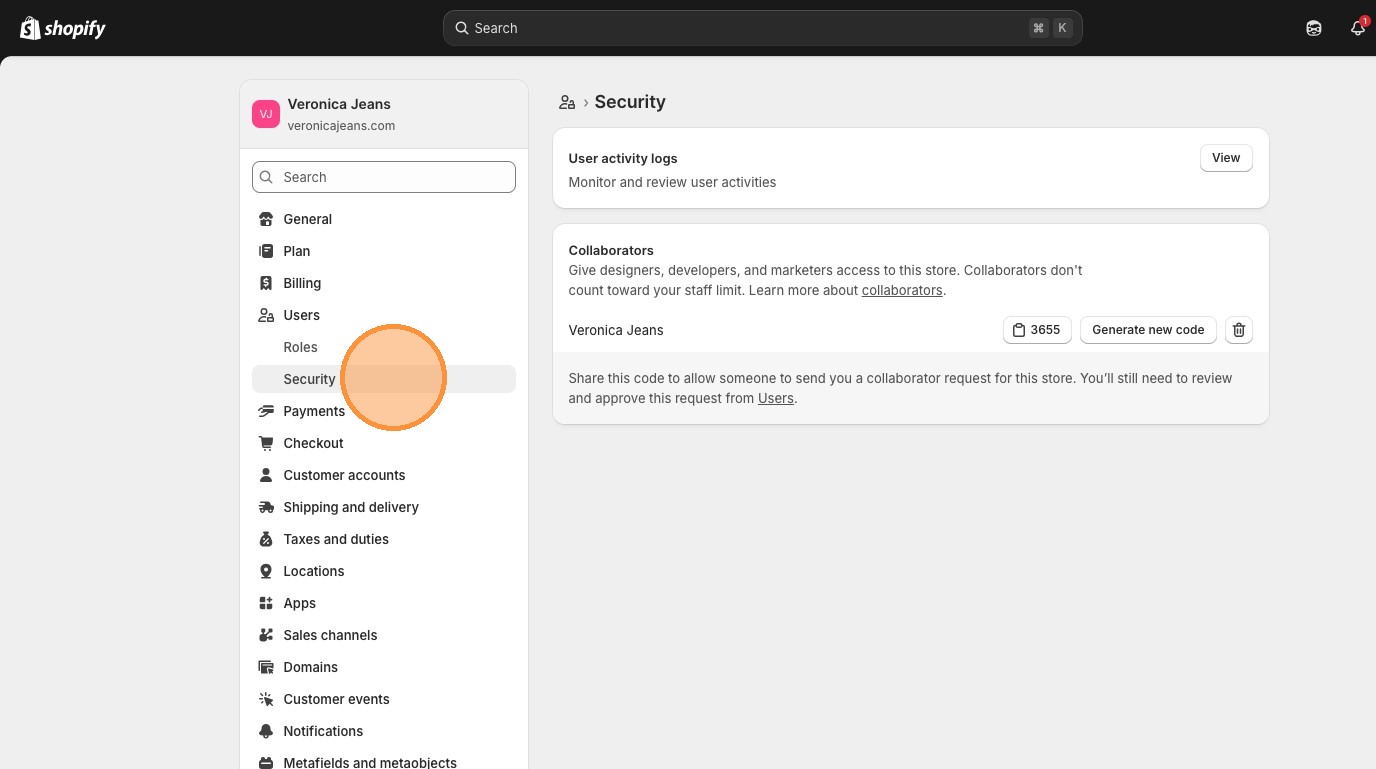
On a new store (before choosing a plan), the "Collaborators" section appears directly in the Users area. Once your store is active and you have ownership, collaborator management moves to the "Security" section.
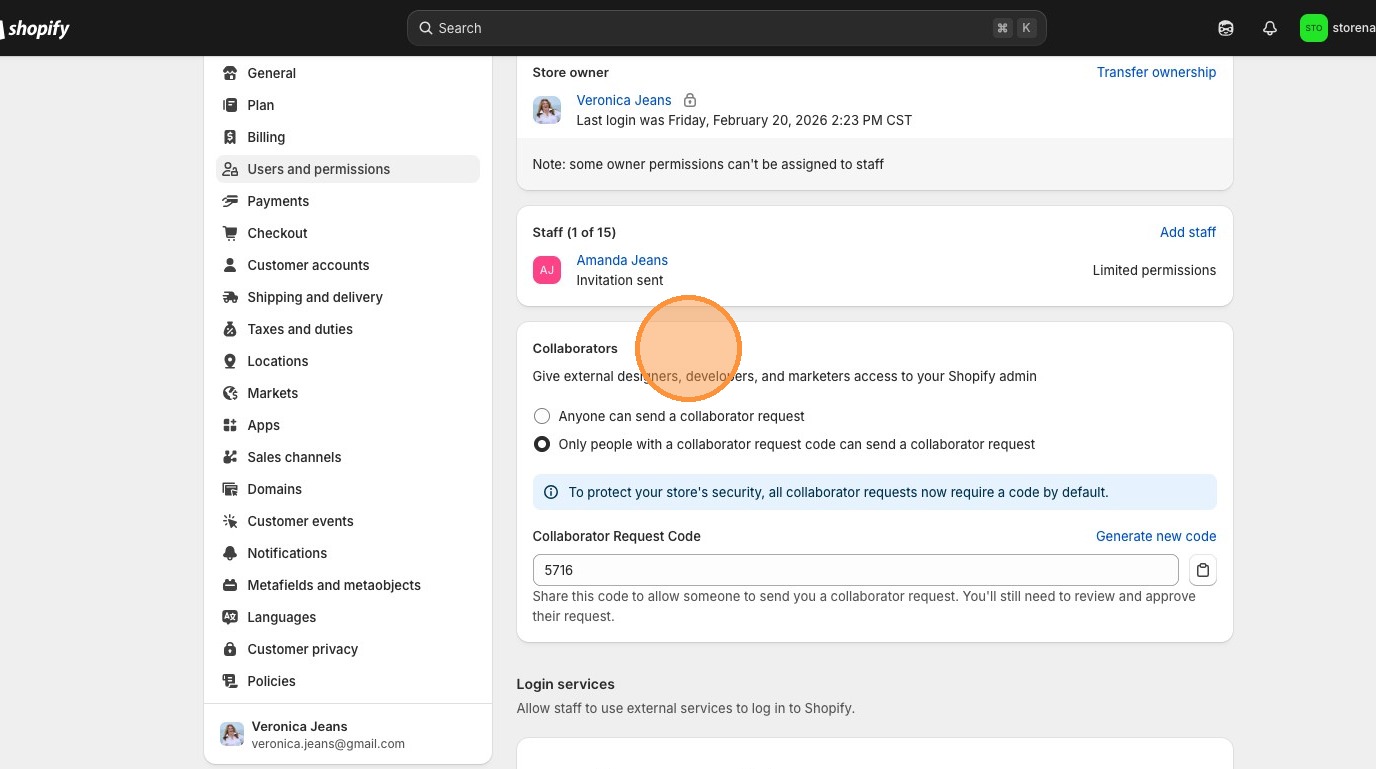
You have a unique code that you share with your collaborator (developer, designer, consultant). They'll use this code to send you a collaborator request. You can also generate a new code if needed.
Share this code to allow someone to send you a collaborator request for your store. You'll still need to review and approve the request—sharing the code alone doesn't grant access.
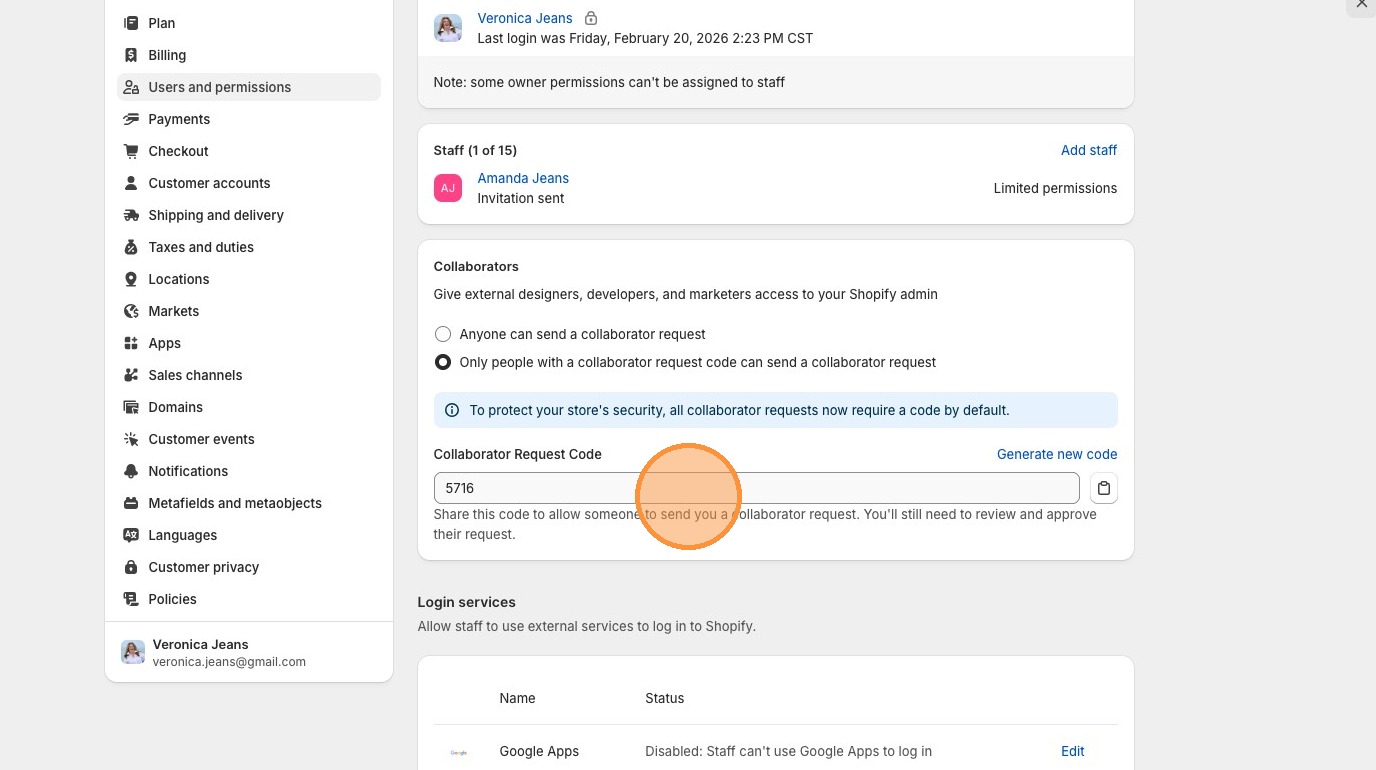
You and your staff can log in from a browser or the Shopify app. You can also connect login services (Apple, Facebook, Google) for faster access if your account is connected to one.
Managing Your Users Dashboard
Once your store is active and you have team members, the Users dashboard becomes your go-to for managing access across your business.
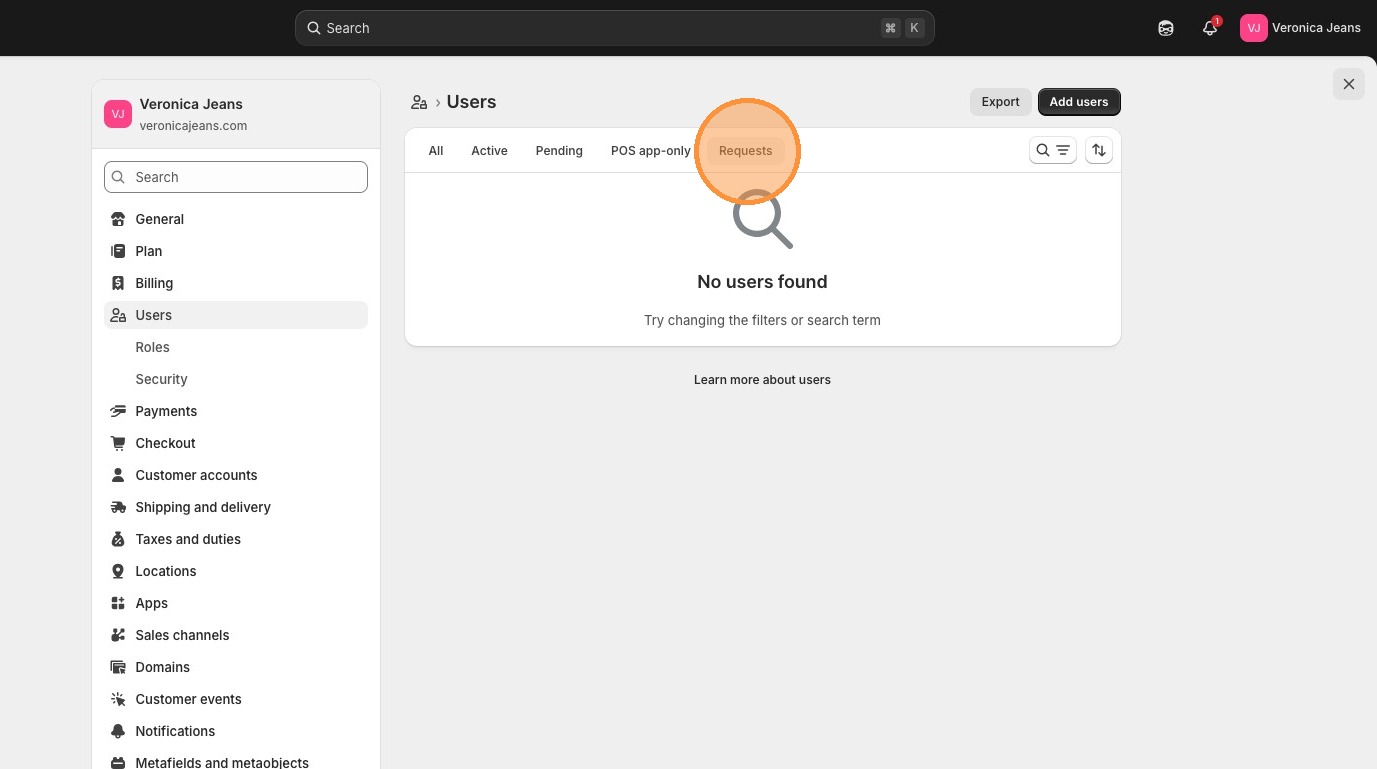
When you select "Users" on an active store, you'll see all current staff members listed. Click "Add users" at the top of the screen to bring new people in.
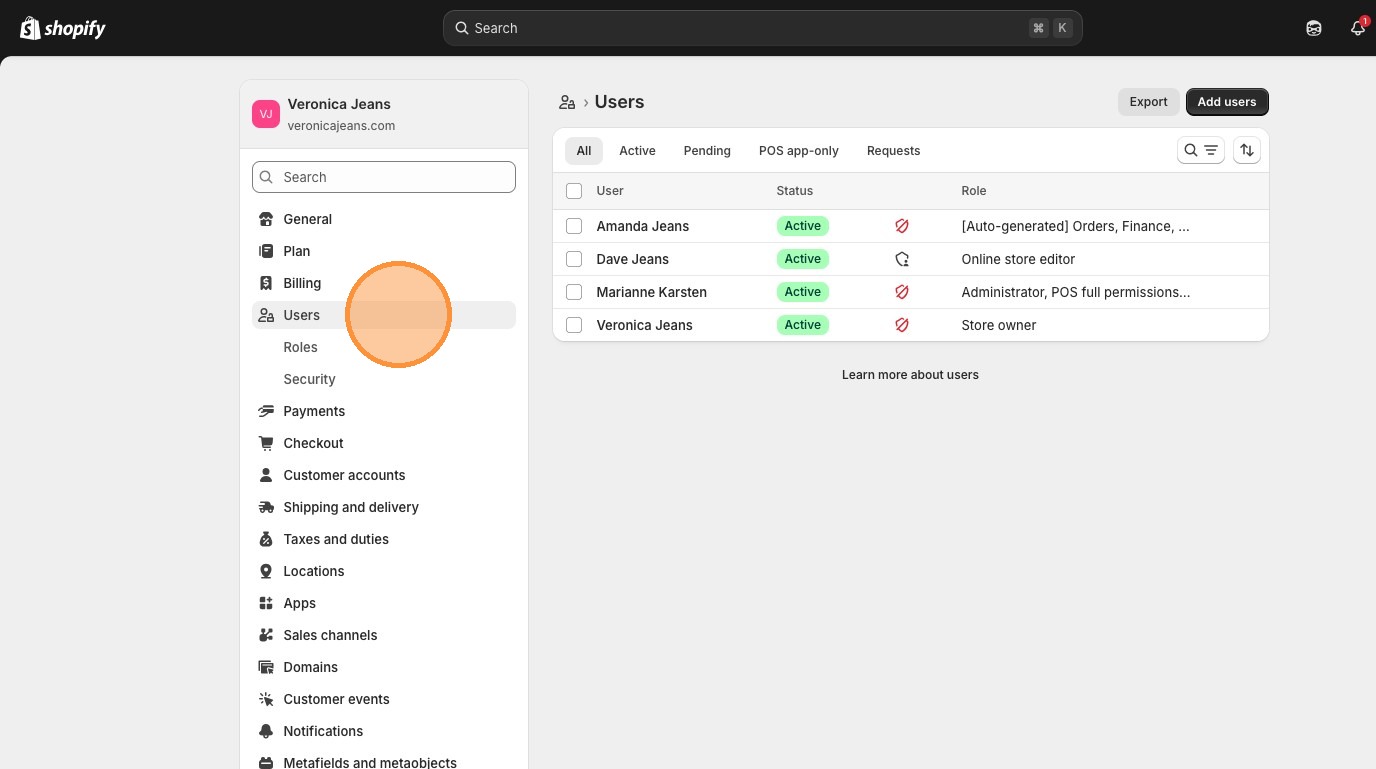
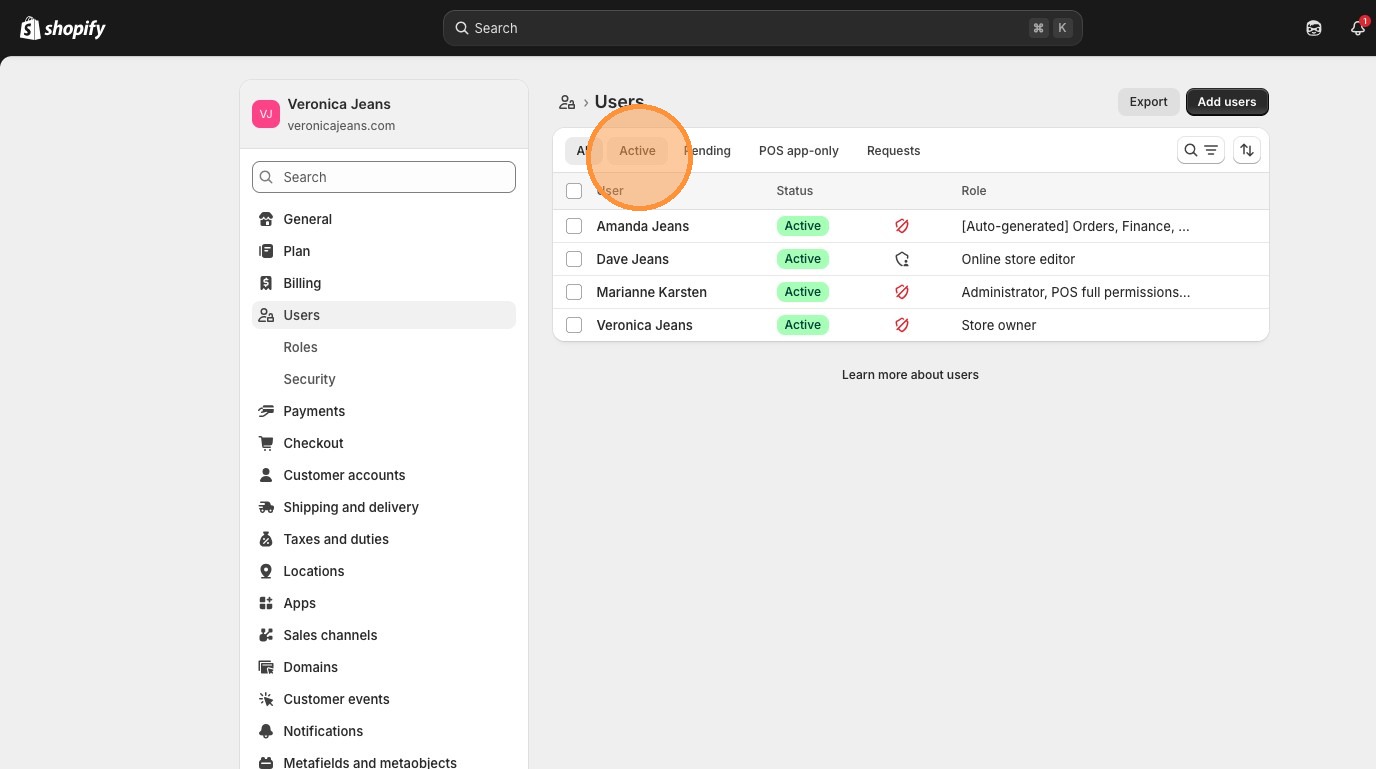
The Users section has multiple tabs to organize your team:
- "Active" — Currently active users with store access
- "Pending" — Users who've been invited but haven't accepted yet
- "POS app-only" — Users with point-of-sale access only
- "Requests" — Pending collaborator access requests
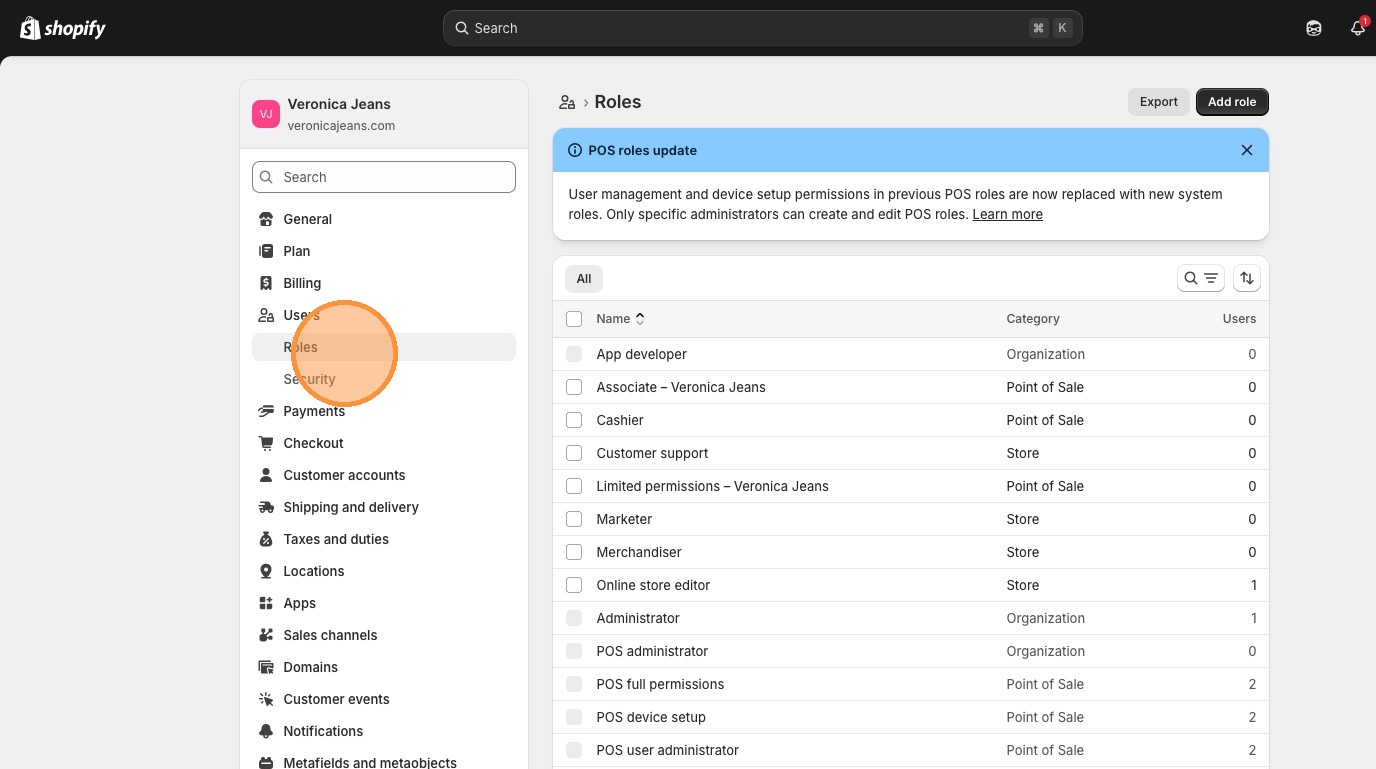
In the "Roles" section, you can see all the roles defined for your Shopify store, what category of permissions each role includes, and how many users are assigned to each role. This is your birds-eye view of who can do what.
On an active store, collaborator access is managed under the "Security" section. This is where you give designers, developers, and marketers access to your store. Remember: collaborators don't count toward your staff limit.
Once you've shared your collaborator code and a partner sends a request, check the "Requests" tab to view their status. Click the name and approve the request to grant them access.
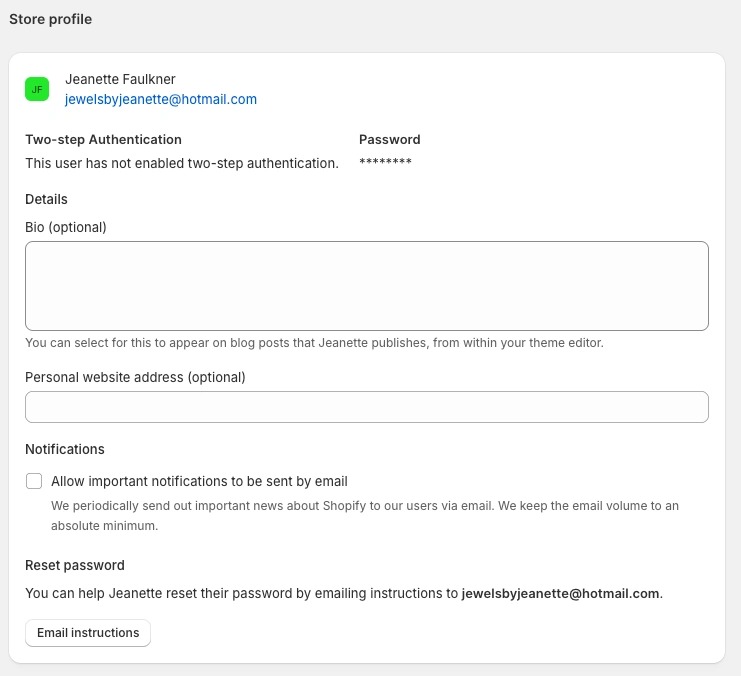
When adding a staff account, there are additional options to identify the user—including profile details and contact information that help you manage a growing team.
Store Ownership Transfer: The Critical Step Most People Miss
This section is one of the most important things I can teach you about Shopify. If someone else set up your store—a developer, a Shopify Expert, an agency—you need to take ownership. Period.
I've seen too many store owners who are running a business on a store they don't actually own. That means someone else controls your billing, your data, and your ability to operate. Not acceptable.
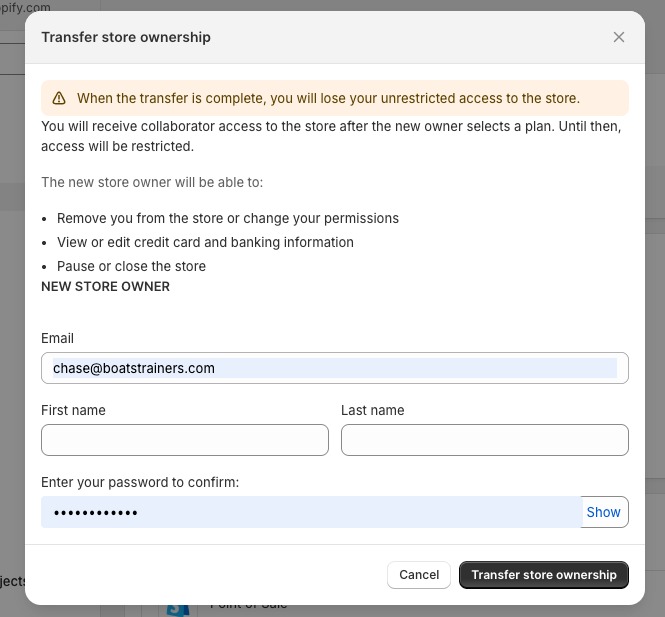
When ownership is transferred, the current owner will:
- Lose their unrestricted access to the store
- Receive collaborator access after you select a plan (until then, their access is restricted)
As the new store owner, you will be able to:
- Remove anyone from the store or change their permissions
- View or edit credit card and banking information
- Pause or close the store
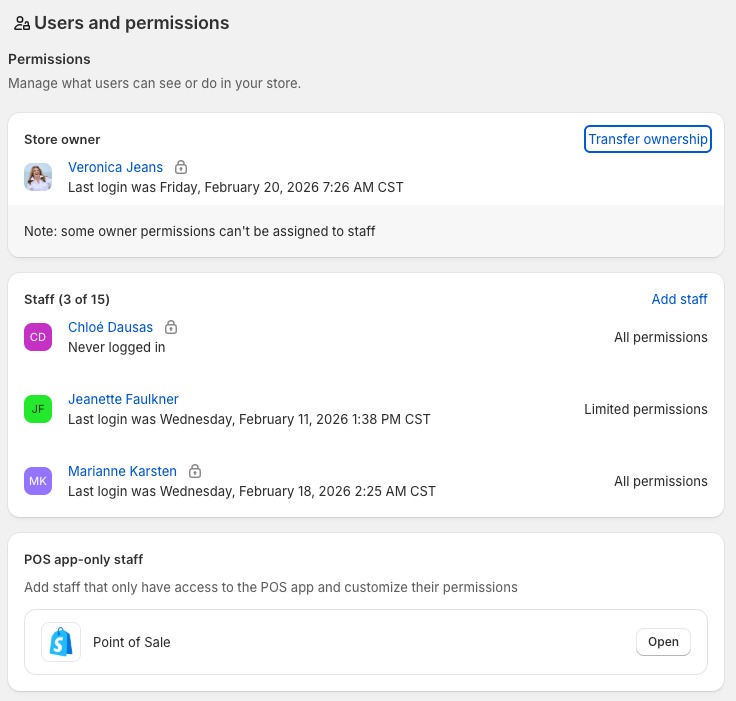
Your developer or Shopify Expert initiates the transfer from their end. They need to:
- Go to
Settings > Users - Click their name, then "Store owner" → "View stores"
- Select the store and click "Change ownership"
- Enter your email address and confirm
You must already have a staff account on the store to accept ownership. You'll receive an email to accept the transfer.
Smart Permission Strategy by Role
Here's the permission framework I recommend to my consulting clients. It protects your business while giving your team what they need to be effective:
| Role | Recommended Permissions | What to Lock Down |
|---|---|---|
| Virtual Assistant | Products, Orders, Customers, Content | Settings, Apps, Financial reports, User management |
| Fulfillment Staff | Orders (view & fulfill), Inventory | Everything else—products, customers, settings, analytics |
| Content Manager | Blog posts, Pages, Products (view only), Marketing | Orders, Settings, Financial data, App management |
| Store Manager | Most permissions including Orders, Products, Customers, Analytics | Settings, App charges, User management (unless senior) |
| Developer | Use Collaborator access instead of staff account | Financial data, Customer PII (unless required) |
| Marketing Agency | Use Collaborator access with Marketing and Analytics permissions | Orders, Settings, Apps, Customer data export |
Ready to Build a Store That Runs While You Sleep?
Staff permissions are just one piece of the puzzle. If you're making $5K-$50K/month and ready to scale with the right systems, automation, and strategy—let's talk.
Book a Free Strategy Call →Frequently Asked Questions
How many staff members can I add to my Shopify store?
It depends on your plan. Basic Shopify doesn't include staff accounts, Shopify plan allows up to 5, Advanced allows up to 15, and Plus allows unlimited. The good news? Collaborator accounts for developers and partners don't count toward your limit on any plan—so use those for external team members.
What is the difference between staff accounts and collaborator accounts in Shopify?
Staff accounts are for your internal team (employees, managers, VAs) and count toward your plan's user limit. Collaborator accounts are for external Shopify Partners (developers, designers, consultants) and are free—they don't count toward your limit. Collaborators access your store through their Partner Dashboard and can be removed at any time.
Can I limit what a staff member can see and do in my Shopify store?
Absolutely—and you should. Shopify provides granular permission controls for products, orders, customers, analytics, marketing, settings, and more. You can also control app permissions separately. The smart move is to give the minimum permissions needed for each role and expand as needed.
How do I transfer Shopify store ownership from a developer to myself?
First, your developer adds you as a staff member with an active account. Then they go to Settings > Users, click their name, select "Store owner" → "View stores," choose the store, and click "Change ownership." They enter your email and confirm. You'll get an email to accept. After accepting and choosing a plan, you have full control and they get collaborator access.
What happens when I transfer Shopify store ownership?
The previous owner loses unrestricted access and gets collaborator access after you select a plan. As the new owner, you gain full control—including the ability to change anyone's permissions, access financial and banking information, and pause or close the store. This is exactly why ownership matters: it puts you in control of your business.
Should I give my virtual assistant full admin access to my Shopify store?
No—this is one of the most common and costly mistakes I see. Your VA should only have permissions for their specific tasks. If they manage products and orders, give them only those permissions. Never give financial, settings, or app installation access unless absolutely necessary. You can always expand later, but you can't undo damage from too much access.
What are Shopify administrator roles and when should I use them?
Administrator roles are high-trust system roles. The Organization administrator has nearly unlimited access including user management across all stores. The Store user administrator can manage users within specific stores only. Reserve these for senior, trusted team members. Most staff should have custom roles with specific permissions tailored to their responsibilities.
Can I use social login (Google, Apple, Facebook) for my Shopify staff accounts?
Yes, Shopify supports login services including Apple, Facebook, and Google. Staff can connect their accounts for faster login through the Login services section in Users settings. However, always ensure two-factor authentication is enabled regardless of login method—this is your security baseline, not optional.
This guide was created by Veronica Jeans, eCommerce Business Consultant & Shopify Expert, using Scribe for step-by-step documentation. Veronica coaches entrepreneurs to build 7-figure online businesses with systems that work while you sleep.
How to Add and Manage Staff Permissions in Shopify
A complete guide to adding users, assigning roles and permissions, managing collaborator access, and transferring store ownership in Shopify.
Frequently Asked Questions
Quick answers to common questions about this topic
